
September 28, 2025 (Gregorian calendar/Day 270)
Sunday, 18 Meskerem 2018 (Ethiopian calendar/1st month)
Eithanim םינתיא 5 (Enochian calendar/7th month/perpetual streams)
~ Yamim Noraim םיארונ םימי “Days of Awe” (Day 6)
September 19, 2025 (International Fixed calendar)
Electric Moon 3, Seli 9 (13 Moon calendar/first quarter moon)
~ Electric Deer Moon of Service, September 20th – October 17th
Vine Moon: September 2 – September 29 (Celtic 13 Month calendar)
Day 7, 7th lunation at 34-43%, 6012 (lunisolar calendar)
13.0.12.17.4 1 Kan 2 Yax (Mayan Long Count calendar)
Ask A Stupid Question Day
(pinterest)
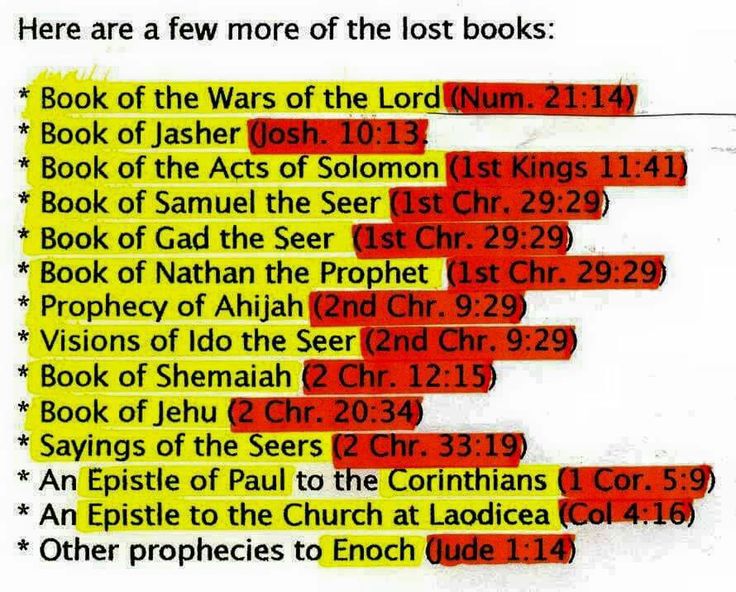
Here are a few more lost books:
Wars of the Lord
Numbers 21: 14; 17; 27-30
Wherefore it shall be spoken in the [a]book of the battles of the Lord,
[b]what thing he did in the red sea, and in the rivers of Arnon,
17Then Israel sang this song, Rise up [k]well, [l]sing ye unto it.
27 Wherefore they that speak in proverbs, say, Come to Heshbon, let the city of Sihon be built and repaired,
28 For [r]a fire is gone out of Heshbon, and a flame from the city of Sihon, and hath consumed Ar of the Moabites, and the lords of Bamoth in Arnon.
29 Woe be to thee, Moab: O people of [s]Chemosh, thou art undone: he hath suffered his sons to be pursued, and his daughters to be in captivity to Sihon the king of the Amorites.
30 Their [t]empire also is lost from Heshbon unto Dibon, and we have destroyed them unto Nophah, which reacheth unto Medeba.
[a] Which seemeth to be the book of the Judges, or as some think, a book which is lost.
[b] Or, (How God destroyed) Waheb (the city) with a whirlwind and the valley of Arnon.
[k] Or, spring.
[l] Ye that receive the commodity thereof, give praise for it.
[r] Meaning, war.
[s] Chemosh was the idol of the Moabites, 1 Kings 11:33, who was not able to defend his worshippers, which took the idol for their father.
[t] Hebrew, light.
WARS OF THE LORD, BOOK OF (סֵ֖פֶר מִלְחֲמֹ֣ת יְהוָ֑ה). One of the several books no longer extant which are mentioned in the OT and which played an important, if somewhat obscure, part in Israel’s literary history. It is cited by name and quoted in Numbers 21:14 to substantiate the narrator’s statement concerning the boundary cut by the deep ravines of the Arnon between Moab and Ammon. The quotation as it stands is obscure (the syntax is apparently incomplete and nothing is known of the names Waheb and Suphah) and sheds little light on the character of the book itself. It is a plausible conjecture, however, that vv. 17f. and 27-30 are drawn from the same source, not only because of their proximity to the first quotation, but in the case of 27-30 because of the occurrence of a number of identical place names as well as the suitability of the taunt itself for the content of the book as suggested by its title. (Book of Wars of the Lord – Encyclopedia of The Bible – Bible Gateway)
Jasher
Joshua 10: 13
And the Sun abode, and the moon stood still, until the people avenged themselves upon their enemies: (is not this written in the book of [a]Jasher?)
so the Sun abode in the midst of the heaven, and hasted not to go down for a whole day.
[a] Some read the book of the righteous, meaning Moses: the Chaldea text readeth in the book of the Law, but it is like that it was a book thus named, which is now lost.
…but has since been found
“This is one of the apochrypal Books of Jasher. There are several (as many as five) separate works by this title, all composed much later than Biblical times. This particular one is a translation of a Hebrew book printed in 1613. Sepir Ha Yasher, the Hebrew title of this book, means the ‘Book of the Upright’, or ‘the Upright or Correct Record’. This title was misread as ‘Jasher’, and at some point Jasher was treated as a proper name; however the pronoun ‘the’ (hebrew ‘ha’) never preceeds proper names.
“There is also another spurious Book of Jasher, published 1750, in which Jasher is treated as the name of the author.
“This text covers much of the same ground as the traditional Mosaic books of the Bible, from the creation of the world to the death of Moses, albeit with several minor variations.” (Sacred Texts)
…I am thinking about sharing this after Shepherd of Hermas, but Daniel might come first.
Acts of Solomon
1 Kings 11: 41
And the rest of the words of Solomon, and all that he did, and his wisdom,
are they not written in the [a]book of the acts of Solomon?
[a] Which book as is thought, was lost in their captivity.
“The Book of the Acts of Solomon is a non-canonical text referenced in the Old Testament, specifically in 1 Kings 11:41. This book is believed to have contained detailed accounts of King Solomon’s reign, his wisdom, his building projects, and other significant events during his time as the ruler of Israel. The Berean Standard Bible mentions this book in the following passage: “As for the rest of the acts of Solomon—all that he did, as well as his wisdom—are they not written in the Book of the Acts of Solomon?”” (Bible Hub)
Samuel the Seer
1 Chronicles 29: 29
Concerning the acts of David the king, first and last, behold they are written in the book of Samuel the Seer, and in the book of [q]Nathan the Prophet, and in the book of Gad the Seer,
[q] The books of Nathan and Gad are thought to have been lost in the captivity.
“Samuel, often referred to as “the Seer,” is a pivotal figure in the history of Israel, serving as a prophet, priest, and judge. His life and ministry are primarily chronicled in the books of 1 Samuel and 1 Chronicles. Samuel’s role as a seer is significant, as he was instrumental in guiding Israel during a transitional period from the time of the judges to the establishment of the monarchy.” (Bible Hub)
Gad the Seer
1 Chronicles 29: 29
Concerning the acts of David the king, first and last, behold they are written in the book of Samuel the Seer, and in the book of [q]Nathan the Prophet, and in the book of Gad the Seer,
[q] The books of Nathan and Gad are thought to have been lost in the captivity.
“The Book of Gad the Seer (Hebrew: דברי גד החזה, romanized: diḇrê Gāḏ ha-ḥōzeh) is a presumed lost text, supposed to have been written by the biblical prophet Gad, which is mentioned at 1 Chronicles (1 Chronicles 29:29). The passage reads: “Now the acts of David the king, first and last, behold, they are written in the book of Samuel the seer, and in the book of Nathan the prophet, and in the book of Gad the seer.” Some traditional Rabbinic commentaries understood this to be a reference to the books of I and II Samuel which were started by Samuel himself and completed by Nathan the Prophet and Gad the Seer.” (wikipedia)
Nathan the Prophet
1 Chronicles 29: 29
Concerning the acts of David the king, first and last, behold they are written in the book of Samuel the Seer, and in the book of [q]Nathan the Prophet, and in the book of Gad the Seer,
[q] The books of Nathan and Gad are thought to have been lost in the captivity.
“The Book of Nathan the Prophet and the History of Nathan the Prophet (Hebrew: דברי נתן הנביא, romanized: diḇrê Nāṯān ha-nāḇî) are among the lost books quoted in the Bible, attributed to the biblical prophet Nathan. They may be the same text, but they are sometimes distinguished from one another. No such text is found anywhere in the Hebrew Bible, so it is presumed to have been lost or removed from earlier texts.” (wikipedia)
Prophecy of Ahijah
2 Chronicles 9: 29
Concerning the rest of the acts of Solomon first and last, are they not written in the book of Nathan the Prophet, and in the prophecy of Ahijah the Shilonite, and in the visions of [a]Iddo the Seer [b]against Jeroboam the son of Nebat?
[a] Or, Iddo.
[b] That is, which prophesied against him.
“Ahijah the Shilonite is a significant prophetic figure in the Hebrew Bible, particularly in the narrative of the divided kingdom of Israel. His account is primarily found in the books of 1 Kings and 2 Chronicles. Ahijah is recognized for his role in the divine appointment of Jeroboam as the first king of the northern kingdom of Israel, as well as for his prophecies concerning the fate of Jeroboam’s dynasty.” (Bible Hub)
Visions of Ido the Seer
2 Chronicles 9: 29
Concerning the rest of the acts of Solomon first and last, are they not written in the book of Nathan the Prophet, and in the prophecy of Ahijah the Shilonite, and in the visions of [a]Iddo the Seer [b]against Jeroboam the son of Nebat?
[a] Or, Iddo.
[b] That is, which prophesied against him.
Iddo the Seer is a somewhat enigmatic figure in the Hebrew Scriptures, known primarily for his role as a prophet and chronicler during the early period of the divided monarchy in ancient Israel. His contributions are mentioned in the context of the reigns of King Solomon, King Rehoboam, and King Abijah of Judah. (Bible Hub)
Book of Shemaiah
2 Chronicles 12: 15
The acts also of Rehoboam, first and last, are they not written in the [k]book of Shemaiah the Prophet, and Iddo the Seer, in rehearsing the genealogy? and there was war always between Rehoboam and Jeroboam.
[k] Hebrew, sayings.
Shemaiah is a prophet mentioned in the Hebrew Bible, primarily known for his role during the reign of Rehoboam, the son of Solomon and king of Judah. His account is found in the historical books of the Old Testament, specifically in 1 Kings and 2 Chronicles. (Bible Hub)
Book of Jehu
2 Chronicles 20: 34
Concerning the rest of the acts of Jehoshaphat first and last, behold,
they are written in the book of Jehu the son of Hanani,
which is mentioned in the book of the kings of Israel.
Jehu the son of Hanani is a figure mentioned in the Hebrew Bible, known primarily for his role as a prophet during the reigns of Baasha and Jehoshaphat. He is noted for his boldness in delivering messages of judgment and reform, and his contributions are referenced in the context of historical records that are not extant today. (Bible Hub)
Sayings of the Seers
2 Chronicles 33:19
And his prayer and how God was entreated of him, and all his sin,
and his trespass, and the places wherein he built high places,
and set groves and images (before he was humbled) behold,
they are written in the book of the [a]Seers.
[a] Or, Hozai.
…can’t really find any info, except short articles quoting 2 Chronicles 33: 19
The Epistle of Paul to the Corinthians
1 Corinthians 5:9
[a]I wrote unto you in an Epistle, that ye should not company together with fornicators,
[a] Now he speaketh more generally; and that which he spake before of the incestuous person, he showeth that it pertaineth to others, which are known to be wicked, and such as through their naughty life are a slander to the Church, which ought also by lawful order be cast out of the community of the Church. And making mention of eating meat, either he meaneth those feasts of love whereat the Supper of the Lord was received, or else their common usage and manner of life which is rightly to be taken, lest any man should think that either matrimony were broken by excommunication, or such duties hindered and cut off thereby, as we owe one to another: children to their parents, subjects to their rulers, servants to their masters, and neighbor to neighbor, to win one another to God.
THE FIRST LETTER TO THE CORINTHIANS
Paul’s first letter to the church of Corinth provides us with a fuller insight into the life of an early Christian community of the first generation than any other book of the New Testament. Through it we can glimpse both the strengths and the weaknesses of this small group in a great city of the ancient world, men and women who had accepted the good news of Christ and were now trying to realize in their lives the implications of their baptism. Paul, who had founded the community and continued to look after it as a father, responds both to questions addressed to him and to situations of which he had been informed. In doing so, he reveals much about himself, his teaching, and the way in which he conducted his work of apostleship. Some things are puzzling because we have the correspondence only in one direction. (bible.usccb.org)
…I don’t know why this is included in the lost books, unless there are parts of it that are lost to us…
The Epistle to the Church of Laodicea
Colossians 4: 14
Luke the beloved physician greeteth you, and Demas.
“LAODICEANS, EPISTLE TO. Writing to the Colossians, Paul mentions a letter “from Laodicea,” which he instructs them to have read in their church (Col 4:16). This phrase has been much discussed (see Lightfoot, Colossians [1875], 340ff; the pagination differs in later editions). Three main suggestions have been advanced, each with several subordinate alternatives attached: (a) that it was a letter written by the Laodiceans; (b) that it was written by Paul from Laodicea; and (c) that it was addressed to the Laodiceans. The first two, on any of the alternatives suggested, present considerable difficulties, and the third is beyond question the most natural explanation; but it immediately raises the further question of identification. If written by Paul, the letter was presumably a companion to Colossians, but was it one of the extant letters (and if so, which?) or a letter now lost? According to Tertullian (Adv. Marc. V. xi), the Marcionites identified it as Ephesians, but other suggestions also have been made. The Muratorian Canon mentions a letter to the Laodiceans “forged in Paul’s name for the sect of Marcion.”” (Bible Gateway)
…this I have already shared: The First Bible – The Epistle of Paul to the Laodiceans 1 (Holly’s World)
other prophecies to Enoch
Jude 1: 14
And Enoch also the seventh from Adam, prophesied of such, saying,
Behold, the Lord [x]cometh with thousands of his Saints,
[x] The present time for the time to come.
other prophecies to Enoch…
THE BOOK OF THE SECRETS OF ENOCH.
~ THIS new fragment of early literature came to light through certain manuscripts which were recently found in Russia and Servia and so far as is yet known has been preserved only in Slavonic. Little is known of its origin except that in its present form it was written somewhere about the beginning of the Christian era. Its final editor was a Greek and the place of its composition Egypt. Its value lies in the unquestioned influence which it has exerted on the writers of the New Testament. Some of the dark passages of the latter being all but inexplicable without its aid.
(Sacred Texts)
I’ve done an online/web search for all the books listed here, but mostly came up with nothing. Jasher and Enoch are available…I thought I’d shared at least a start to Enoch, but came up with a video and a chapter here and there. So, I might get into Jasher and Enoch in the near future. There’s 91 chapters in Jasher, and Enoch has three books plus – so we’ll see.
While searching, I did find The Second Book of HERMAS, called his COMMANDS on Sacred Texts. This is not included in the Shephard of Hermas which I am sharing at the moment, so when I finish there, I will include this as well.
In my Apocrypha book, are the Words of Gad and the testament of Gad, among others. As far as I can tell, none of the others are included, without looking into each subsection and fragments that are included.
~ all Bible verses come from the 1599 Geneva Bible unless otherwise noted
~ I will be digging into any books I can find
When the time is appropriate, I will be sharing what I can find. After the Shepherd of Hermas I plan on sharing Daniel. After that, we shall see.
hope you have a great day!
thanks for stopping by!!
 Holly'sWorld2.0
Leave a Reply