
May 8, 2026 (Gregorian calendar/5th month/Day 127)
Friday, 30 Meyazya 2018 (Ethiopian calendar/8th month)
Ziw (Zif) זו 15 (Enochian calendar/2nd month/Bright flowers)
~ Omer 20/Israel Enters the wilderness of Sin (Ex 16:1)
16 May, 2026 (International Fixed calendar)
Spectral Moon 11, Silio 7 (13 Moon calendar/Last Quarter moon)
~ Spectral Serpent Moon of Liberation, May 2nd – May 29th
Willow Moon: April 15 – May 12 (Celtic 13 Tree Month/5th month)
Month of the Planting Moon…A na a gv ti (Cherokee Moon)
13.0.13.10.6 2 Cimi 19 Wo’ (Mayan Long Count calendar)
Free Trade Day, No Socks Day
One Nation Under God
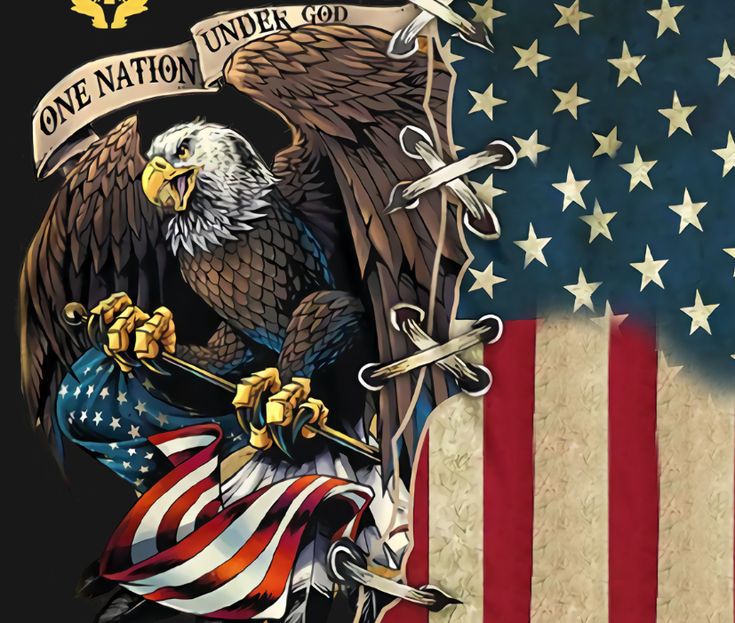
(Pinterest)
Compliance isn’t Safety. It’s Surrender.
“RESIST THEM”
American Independence was built on the understanding that compliance with arbitrary power isn’t safety – or peace.
It’s surrender.
That’s an essential, but long-forgotten foundation of the American Revolution: Laws made outside the limits of the constitution aren’t law at all.
And they should be treated that way too.
LIMITS
The starting point? Government doesn’t get to do whatever it wants. It has limits.
As third Chief Justice Oliver Ellsworth put it, when it goes beyond those limits – those acts aren’t “law.” They’re void – right from the start.
“If they make a law which the Constitution does not authorize, it is void”
Declaring something void is one thing. But making it that way in practice is another. Algernon Sidney, whose book Discourses Concerning Government was highly influential on the American revolutionaries, said the people should treat them that way, too.
“That which is not just, is not Law; and that which is not Law, ought not to be obeyed”
This view was widely held throughout the Revolution. For example, Patrick Henry, in his Virginia resolves against the Stamp Act, said that when government goes beyond its limits, the people are not required to obey.
“The Inhabitants of this Colony, are not bound to yield Obedience to any Law or Ordinance whatever, designed to impose any Taxation whatsoever upon them, other than the Laws or Ordinances of the General Assembly aforesaid.”
But the British persisted in passing more arbitrary acts. And by the time the First Continental Congress met in 1774, noncompliance was the American default.
Obedience to arbitrary power was never even on the table.
“To these grievous acts and measures Americans cannot submit”
FOUNDATION
Ellsworth’s view that laws beyond the limits of the Constitution are void wasn’t new or radical when he made the statement in 1788. That went right back to the start of the revolution in 1761, and James Otis Jr.’s speech against the writs of assistance.
“An Act against the constitution is void”
Even under the unwritten British constitution, this explains the difference between free people and subjects. John Jay gave us the hierarchy:
Creator > people > government at the bottom.
“You and all men were created free, and authorized to establish civil government, for the preservation of your rights against oppression, and the security of that freedom which God hath given you, against the rapacious hand of tyranny and lawless power.”
Government then, is supposed to be an agent of the people – the hired help. So the people themselves, as John Dickinson explained, get to decide when government goes too far.
“They will always have the same rights, that all free states have, of judging when their privileges are invaded, and of using all prudent measures for preserving them.”
Thomas Jefferson put that in practice in 1774 in response to a long list of British acts going back over a century. But first, he started with an important caveat, an act is not null and void because of its policy results.
“We do not point out to his majesty the injustice of these acts, with intent to rest on that principle the cause of their nullity”
Instead, it’s based on something much deeper – staying within the bounds of a constitution or not.
“The true ground on which we declare these acts void is, that the British parliament has no right to exercise authority over us.”
To reject this hierarchy – as James Madison wrote – is to reject the Declaration of Independence.
“A plain denial of the fundamental principle on which our independence itself was declared”
~ forgotten foundation of the American Revolution (article | podcast)
~ copied
hope you have a great day!
thanks for stopping by!!
 Holly'sWorld2.0
Leave a Reply